
Testing standards
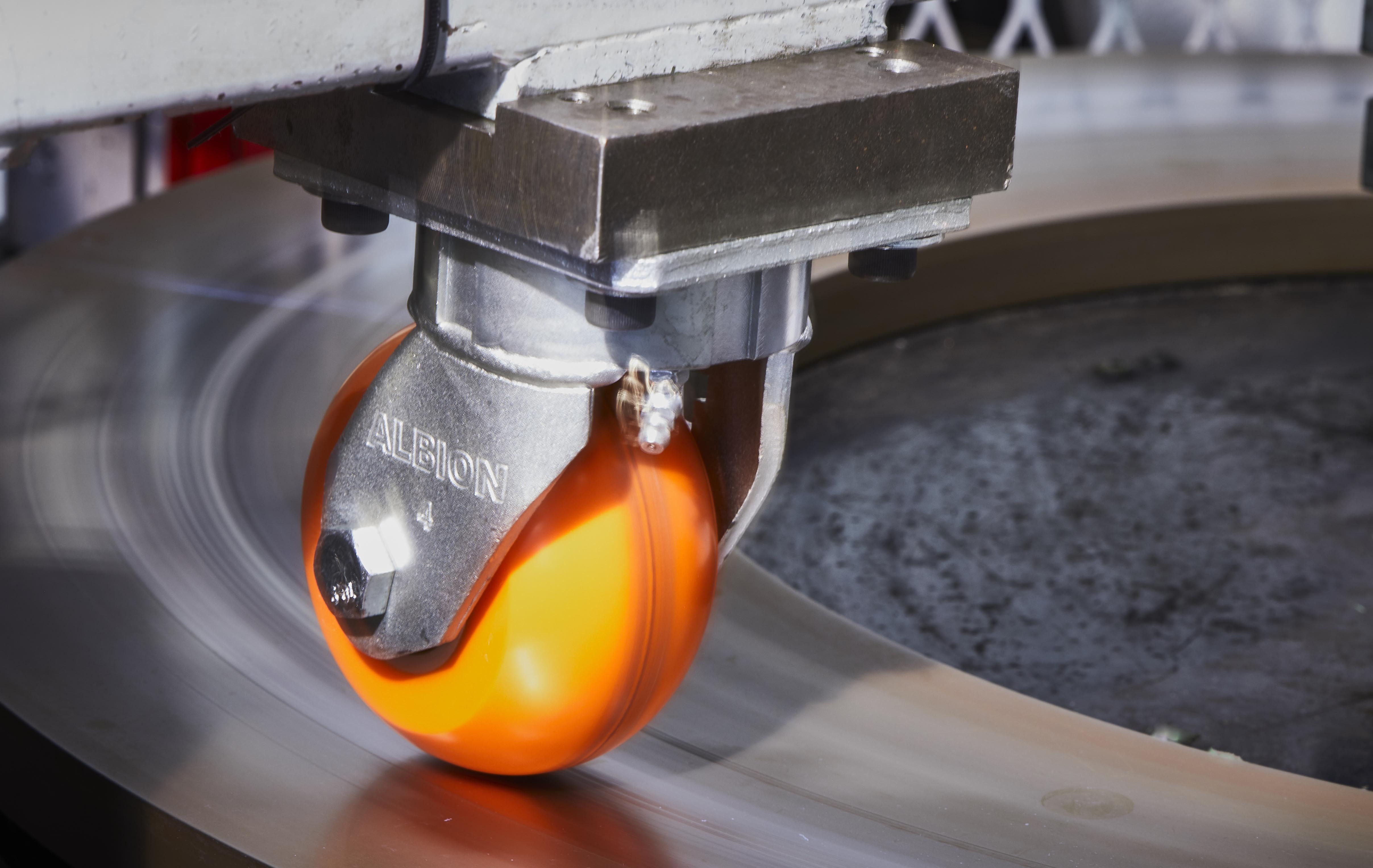
Validated for real-world performance
For more than a century, Colson has combined engineering expertise with rigorous product validation to deliver mobility solutions customers can trust. Our Engineering Test Lab is among the most comprehensive in the industry, enabling our teams to evaluate products under conditions that closely replicate real-world applications. This commitment to testing is one of the reasons customers rely on Colson when performance matters most.
Verified to Industry Leading Standards
- ANSI ICWM-2018
- ISO 9001:2015
- NSF Certification
- RoHS Compliance
- ISO 22882
Testing capabilities
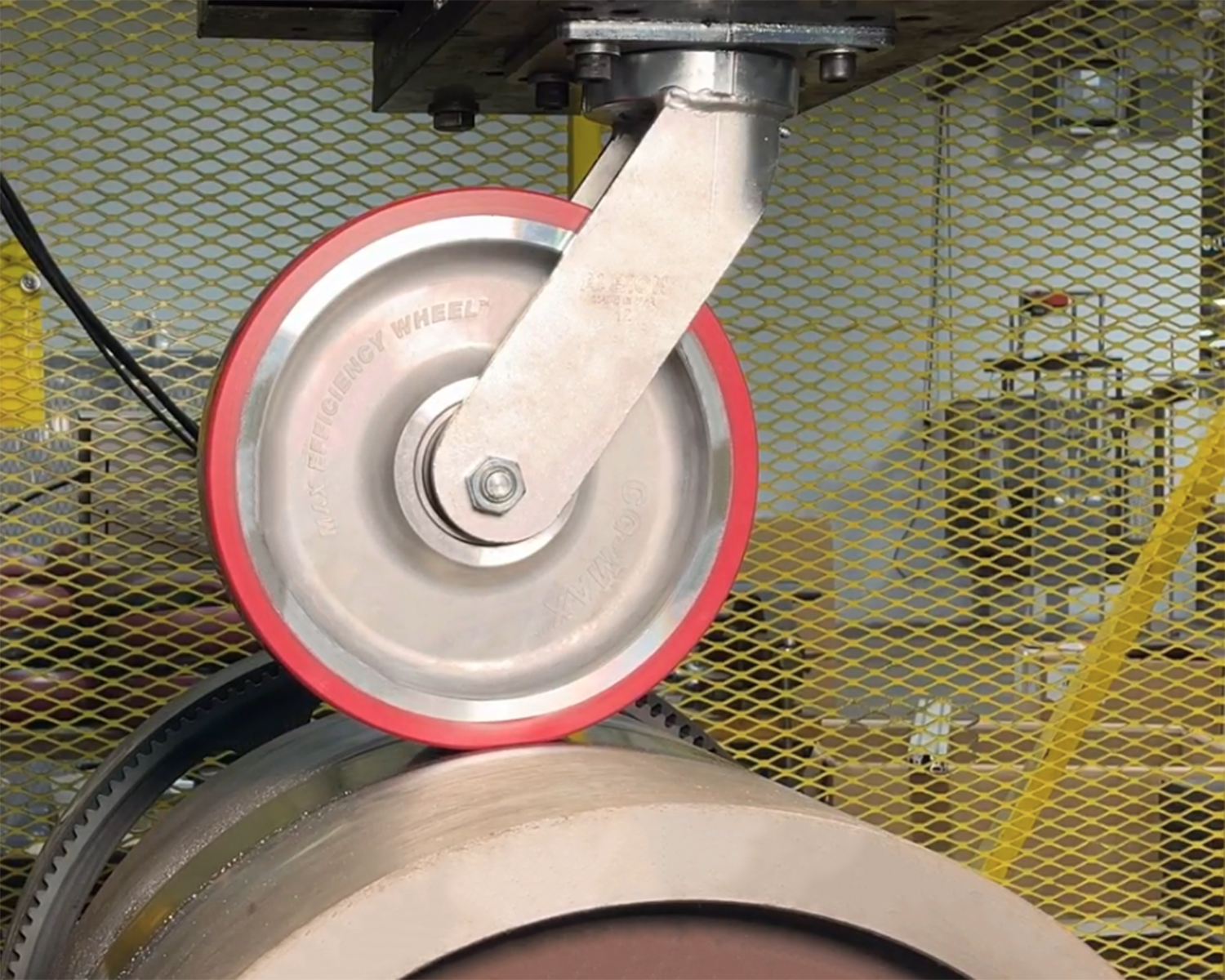
dynamic testing
Validates long-term performance by simulating years of rolling, swiveling, impacts, and floor transitions—helping ensure reliability, reduce downtime, and extend service life in demanding applications.
impact testing
Validates a caster's ability to withstand sudden shock loads encountered in real-world environments, helping ensure structural integrity, reliable operation, and long-term performance when conditions are less than ideal.
static & dynamic load testing
Confirms that rated load capacities perform under actual operating conditions, providing customers with confidence that products can safely support, move, and maneuver loads throughout their intended application.
temperature monitoring
Validates that wheels, bearings, and critical components maintain performance under sustained operating conditions, helping prevent premature wear and ensuring reliable operation throughout the product's service life.
ergonomic testing
Measures the forces required to move equipment, helping validate solutions that reduce operator effort, support workplace safety initiatives, and improve productivity in material handling applications.
Brake fatigue & brake efficiency
Validates braking and locking performance throughout the product lifecycle, helping ensure consistent equipment control, operator confidence, and reliable safety performance after repeated use.
environmental testing & heat aging
Validates performance across extreme temperature conditions, ensuring materials and components maintain reliability, durability, and functionality in the environments where customers operate.
accelerated aging
Predicts long-term material performance by simulating years of environmental exposure, helping validate durability, identify potential degradation, and ensure confidence in product longevity.
electric resistance
Validates a caster's ability to safely dissipate static electricity, helping protect sensitive equipment, products, and processes in applications where electrostatic discharge presents operational risks.
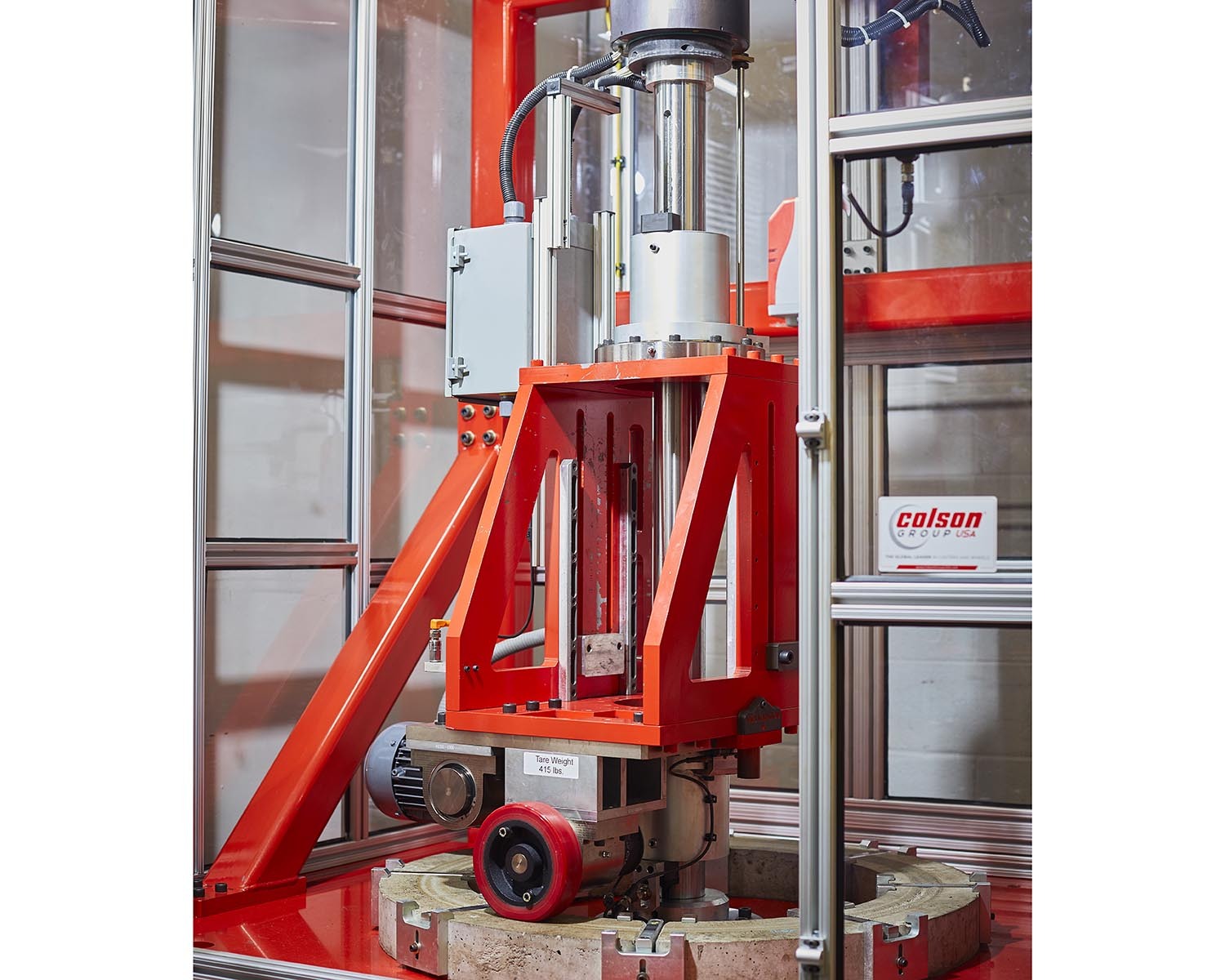
Application Specific testing
healthcare
Medical casters tested to ANSI ICWM standards plus ISO 22882 (medical device caster requirements), which adds specific brake cycle life and brake force criteria designed for clinical environments where brakes are a patient safety mechanism.
robotics
Autonomous Mobile Robots (AMR) wheel testing focuses on constant-contact duty cycles, precise load distribution under dynamic direction changes, and material selection that avoids interference with robot navigation sensors.
aerospace
Our heavy-duty casters, including air cargo and ground support equipment casters, are tested to the upper limits of our impact and dynamic load capabilities — up to 30,000+ inch-lbs impact and 3,000 lbs dynamic load — with additional validation for aviation-specific materials and corrosion requirements.
food service
Beyond NSF certification, food service caster testing includes environmental chamber evaluation for temperature extremes (freezer to oven), chemical resistance testing for harsh cleaning agents, and material validation for high-temperature phenolic and specialty wheel compounds.